
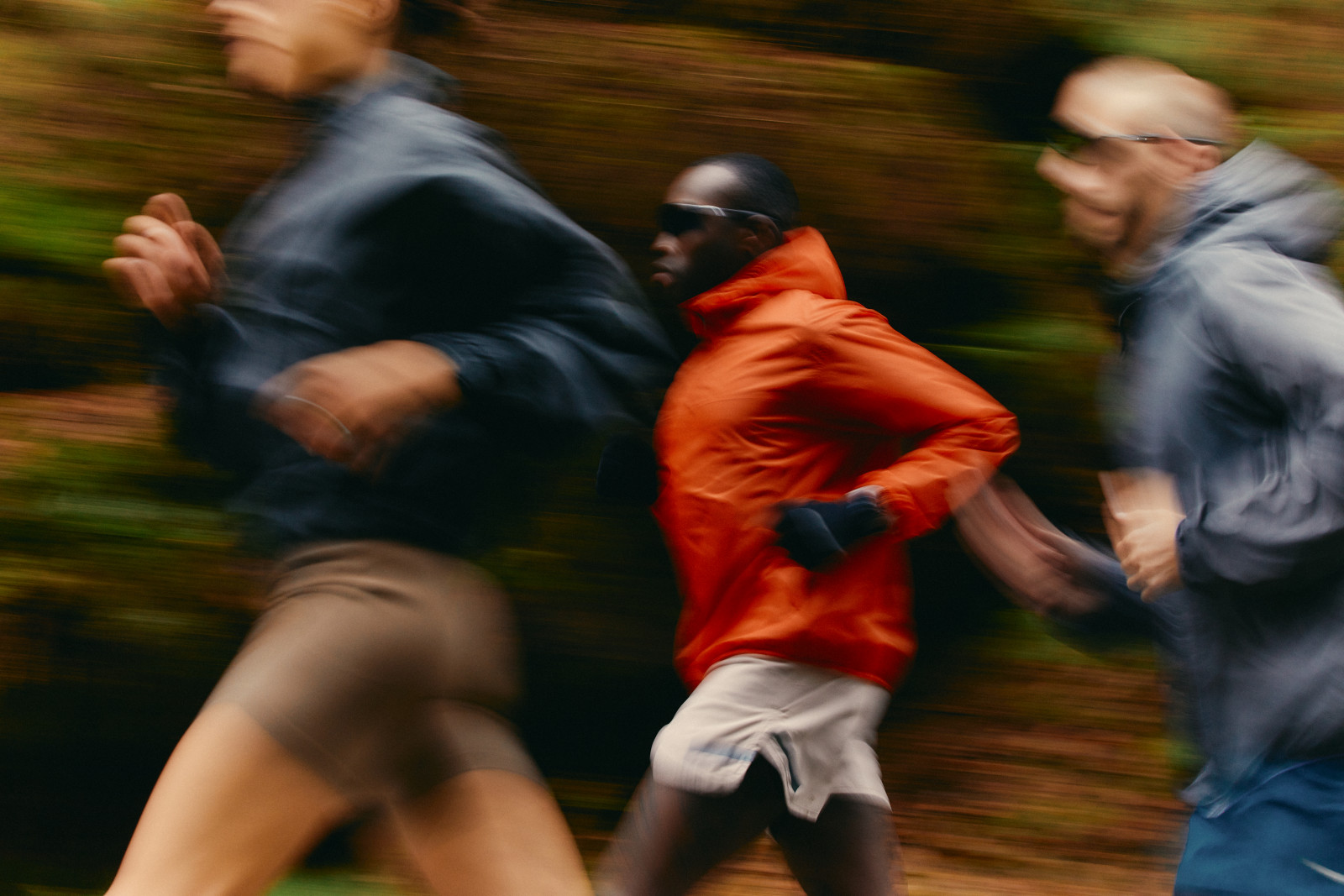
Hey, can we all just slow down for a second? I’m a pretty decent runner, but the truth is I was captain of the track team in high school because I’m loud, not because I was the star sprinter. I like to run a few miles a week, I really do, but running a marathon never appealed. I don’t need that validation, which is surprising, because like all humans, I do love validation.
If marathon miles were years in my career, I’d be near the end. I realized recently this is my 25th year of being a graphic designer, and suddenly I’m looking behind me, trying to remember what I was doing at year 12, what shifted during year 19, what the hell I could have been thinking at mile 3. It’s a relief to understand how much I’ve learned along the way. It feels good to be able to share these insights.
What’s horrifying to admit at mile 25 of your career is that you’re actually running an ultramarathon, that technically you’re only halfway there, if you plan to have a career until retirement age. What’s disorienting is realizing that the well-trodden city streets that marked the first half have now given way to a thinner track—it’s a trail now, and you’re in the woods alone.
You’re not alone, of course—there are plenty of other people your age, but they all seem to be men who swapped out their sneakers for spikes. They appear to be far ahead of you. It seems like they’ve been on this trail before, even though they haven’t, it’s just that the men ahead of them had a map. And it’s not those men’s fault they have a map and you don’t—that map wouldn’t work for you anyway, because it doesn’t mark the small holes and roots that only women can trip over.
(I did ask for a lady’s map, by the way, a few times, from the women ahead of me—but the truth is, no map is detailed enough to represent your individual path, no matter who you are. Women’s paths are as diverse as women, even as those paths converge.)
What I can do is chart my own route to this weird spot in the woods in which I find myself. It could be tempting to wax nostalgic about the past, but it’s really the evolution of the race I’m interested in. Understanding the path to the present location helps us forge ahead with a little more intention than we needed when we were just following all the other runners on concrete.
It’s one of the reasons I’ve started writing again: I keep getting asked for a map. Because I do know where a lot of the sticks and bears are now. I also know that there are other people in these woods, and I want to find them and ask them how they got here and where they think they’re going. We could overlay our own maps, find and optimize common routes, and share those with the young women still on the road.
(We can’t rely on large language models. Everyone knows they regularly eat mushrooms they find in these woods. Without documented charts, AI can’t synthesize lived experience.)
Besides, we do have voices, and voices carry in the woods, we just have to yell loud enough.